Crowns & Bridges6 min read
Five insertion-axis mistakes that turn a good bridge into a remake
Individual insertion axes, undercut handling and connector cross-sections: where multi-unit bridge designs quietly lose fit.
Individual insertion axes, undercut handling and connector cross-sections: where multi-unit bridge designs quietly lose fit.
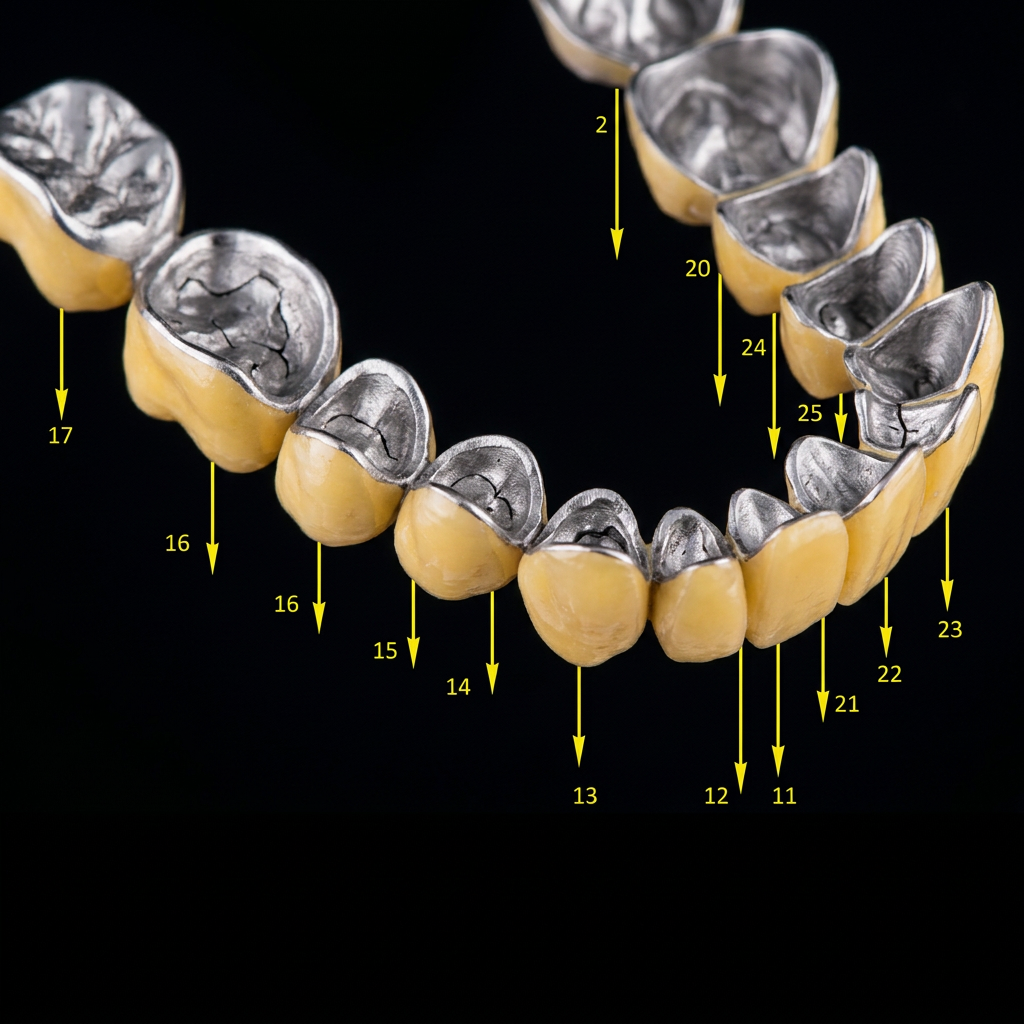
A bridge that will not seat is rarely a scanning problem. It is usually a compromise made in the design when abutment axes disagree.
Every multi-unit case gets an explicit axis review, and where a compromise is unavoidable we flag it in the case thread with the options — segmenting the bridge, adjusting the preparation, or accepting a defined blockout.
Send us three crown cases. We design them free, in your preferred style, with a dedicated case manager on the thread. No card, no contract.